
The Four Quadrants: A Training Framework for Men Who’ve Been Lifting Without a Plan
Strength. Power and speed. Mobility. Endurance. The four buckets every training week needs and the question that tells you which one you’re shorting.


I’ve watched him in every gym I’ve ever trained in.
He’s 47. He’s been lifting since college. He squats 315 on a good day, benches in the low 200s, and has a deadlift PR he hit in 2019 that he hasn’t matched since. He wears the same shorts he wore at 28. He works hard. He shows up four or five days a week and pushes himself in a way most men never will.
He’s also tight as a board. His shoulders ache. He gets winded climbing the stairs to his office. He can’t sit on the floor and play with his kids without his hips locking up. When he tries to sprint at a family barbecue, something pulls in his hamstring within the first twenty yards and he laughs it off and doesn’t run again for another six months.
His program changes every eight weeks. He’s done 5/3/1, then a bro split, then whatever protocol his favorite podcast was selling last quarter, then a CrossFit phase, then back to a powerlifting template because at least that one made sense. He reads everything. He saves Instagram reels. He has opinions about creatine timing.
He is, by any reasonable measure, doing the work.
And he is going nowhere.
I know him because I’ve coached a hundred versions of him. Smart guys. Hard workers. Men who deserve better than the slow drift they’re stuck in. And every time one of them sits down across from me for an intake, I ask the same question.
What are you actually training for?
The silence that follows is the entire reason I’m writing this article.
Why “Just Work Hard” Stops Working After 40
Here’s the thing nobody tells you when you cross 40, because it sounds like an excuse and most of the men I work with hate excuses: the math of training changes.
In your twenties and thirties, hard work covered up the absence of a system. You could waste effort. You could chase the wrong adaptation for six months and still progress, because your body recovered fast enough to forgive you. Volume was free. Intensity was free. You bench-pressed yourself out of bad programming because youth subsidized everything.
After 40, recovery becomes finite. Adaptation slows. Your nervous system gets pickier about what it’s willing to invest in. Effort spent on the wrong thing is effort you can’t get back and the older you get, the more expensive each session becomes.
This is the part most men don’t want to hear, so let me say it as plainly as I can.
In your twenties, the question was “how much can I do?” After forty, the question is “what am I doing with what I have?”
A man at 47 who’s training without a framework isn’t lazy. He isn’t undisciplined. He’s spending a finite resource on a project he hasn’t defined. And the longer he does that, the further he drifts from the body he actually wants to be living in.
What he needs isn’t another protocol. He needs a way of thinking.
The Four Quadrants
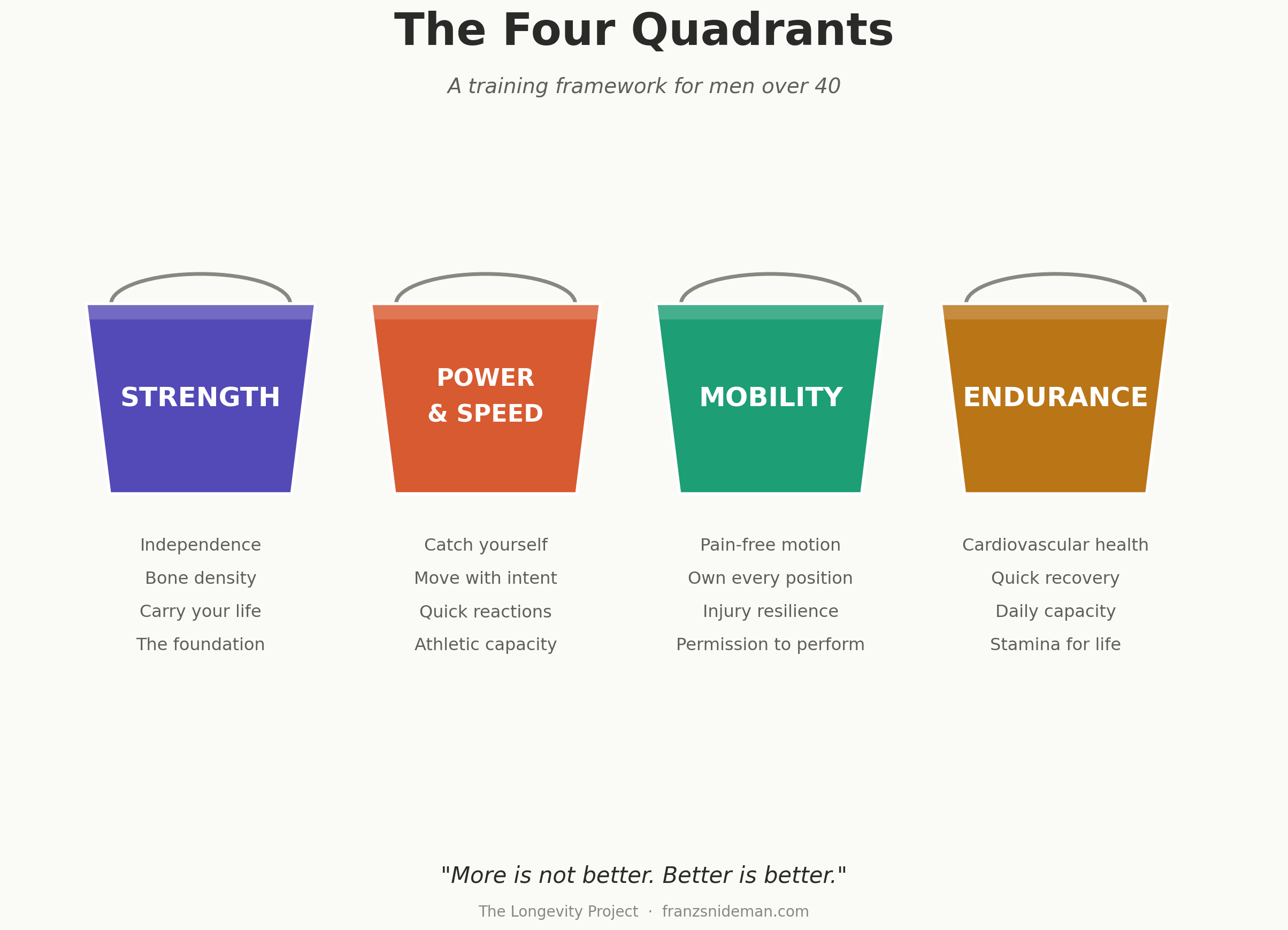
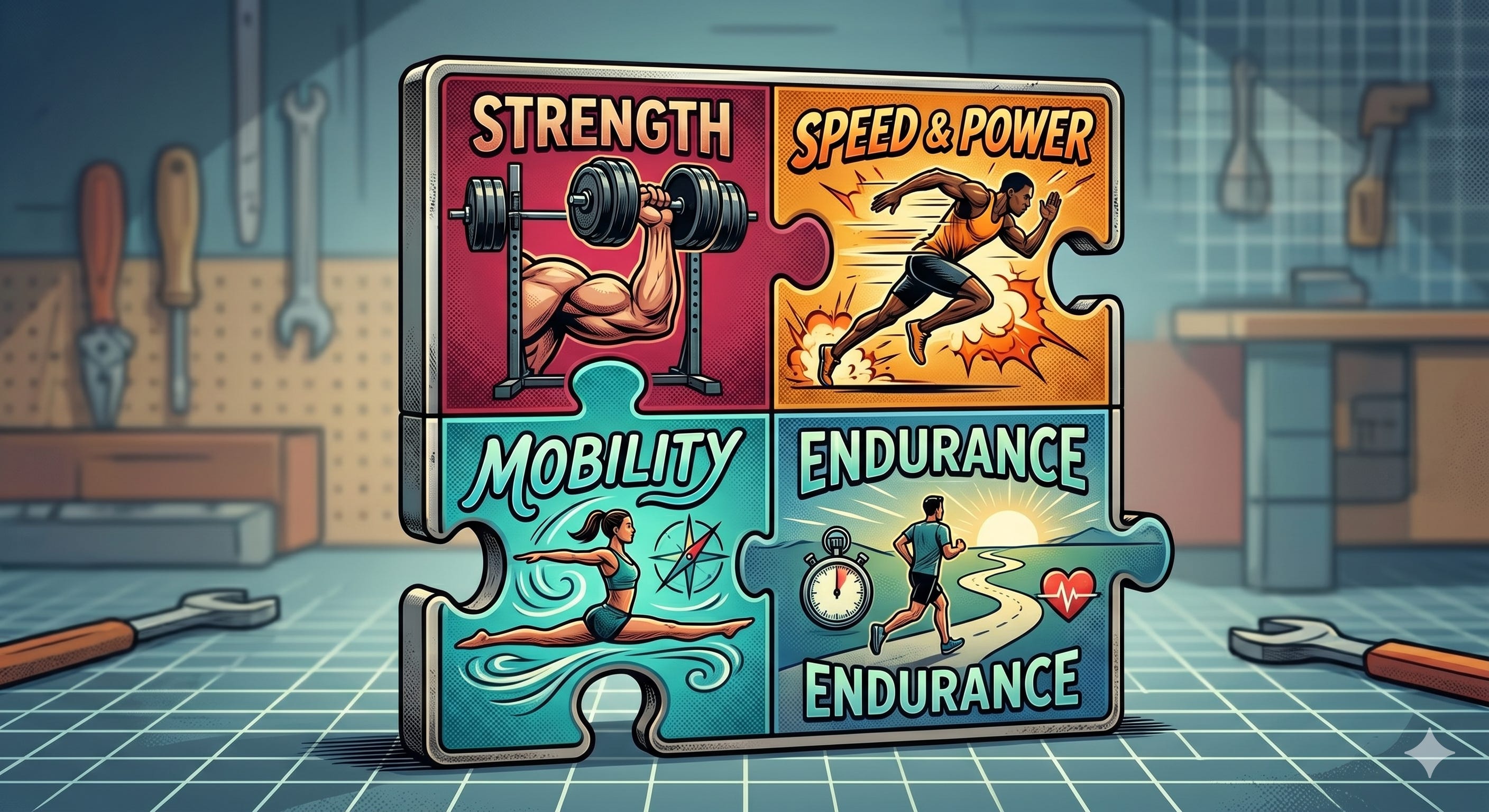
There are four ways the human body produces useful work. Four buckets. Every training week you run, whether you know it or not, is some combination of these four — and the difference between a man who’s thriving at 52 and a man who’s drifting is almost always a question of how those four are balanced.
Here they are.
Strength
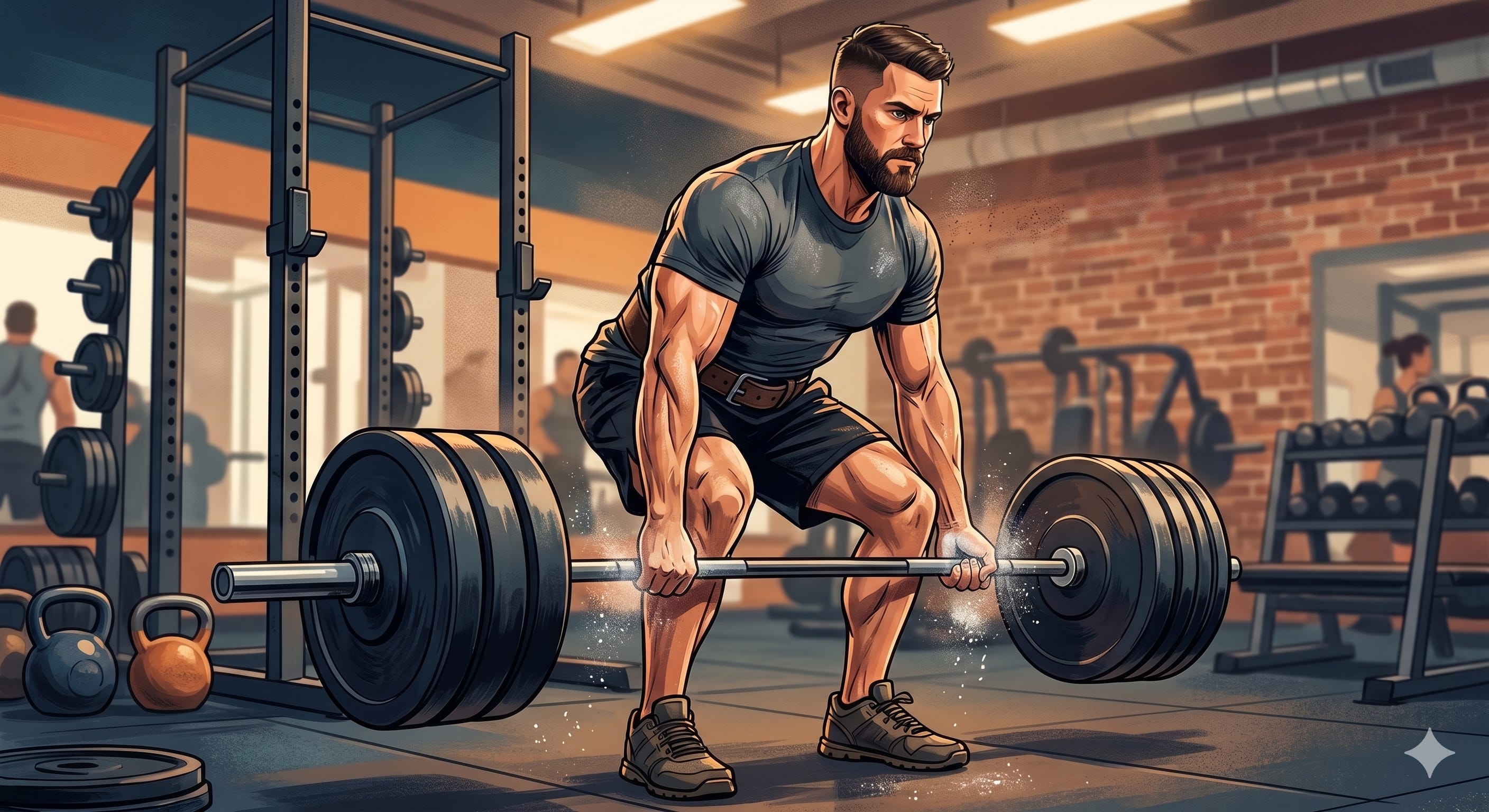
Strength is the capacity to produce force. It’s how much you can pick up, push, pull, or hold against the load the world throws at you. Heavy groceries. A grandchild. Your own bodyweight when you slip on the stairs. The barbell in front of you.
After 40, strength stops being about ego and starts being about currency. Muscle and bone are the two tissues your body spends down by default as you age. Strength training is how you make deposits back into the account. A man who loses his strength loses his independence, in that order, and on a timeline most men don’t see coming until it’s late.
In my own week, this is the deepest bucket. Weighted chin-up pyramids — bodyweight plus 36 kilos at the peak right now. Incline dumbbell bench. Weighted dips. Heavy step-ups. Kettlebell rows. These are the lifts that have kept my frame intact for thirty years, and they’re the lifts I’ll still be doing at 70.
The shortfall question: if strength is missing, the rest of your life starts feeling heavier than it used to.
Power and Speed

Power is strength delivered fast. Speed is power expressed through your whole body. They’re related but not identical, and after 40 they’re the first things to leave you if you don’t train them on purpose.
Here’s the part most men don’t know: power dies twice as fast as strength after 40. A man who can still squat his old numbers may have lost half his ability to jump, and he won’t notice until the day he trips on the curb and can’t catch himself. Power is the difference between falling and not falling. It’s the difference between sprinting across the street to catch a child and watching it happen.
In my training, this is medicine-ball throws, jumps, and the sprint mechanics work I’ve been integrating back in this year. Short doses. High quality. Full recovery between efforts. You don’t grind power……..you express it.
The shortfall question: if power is missing, your body forgets how to move with intent, and small emergencies become big ones.
Mobility
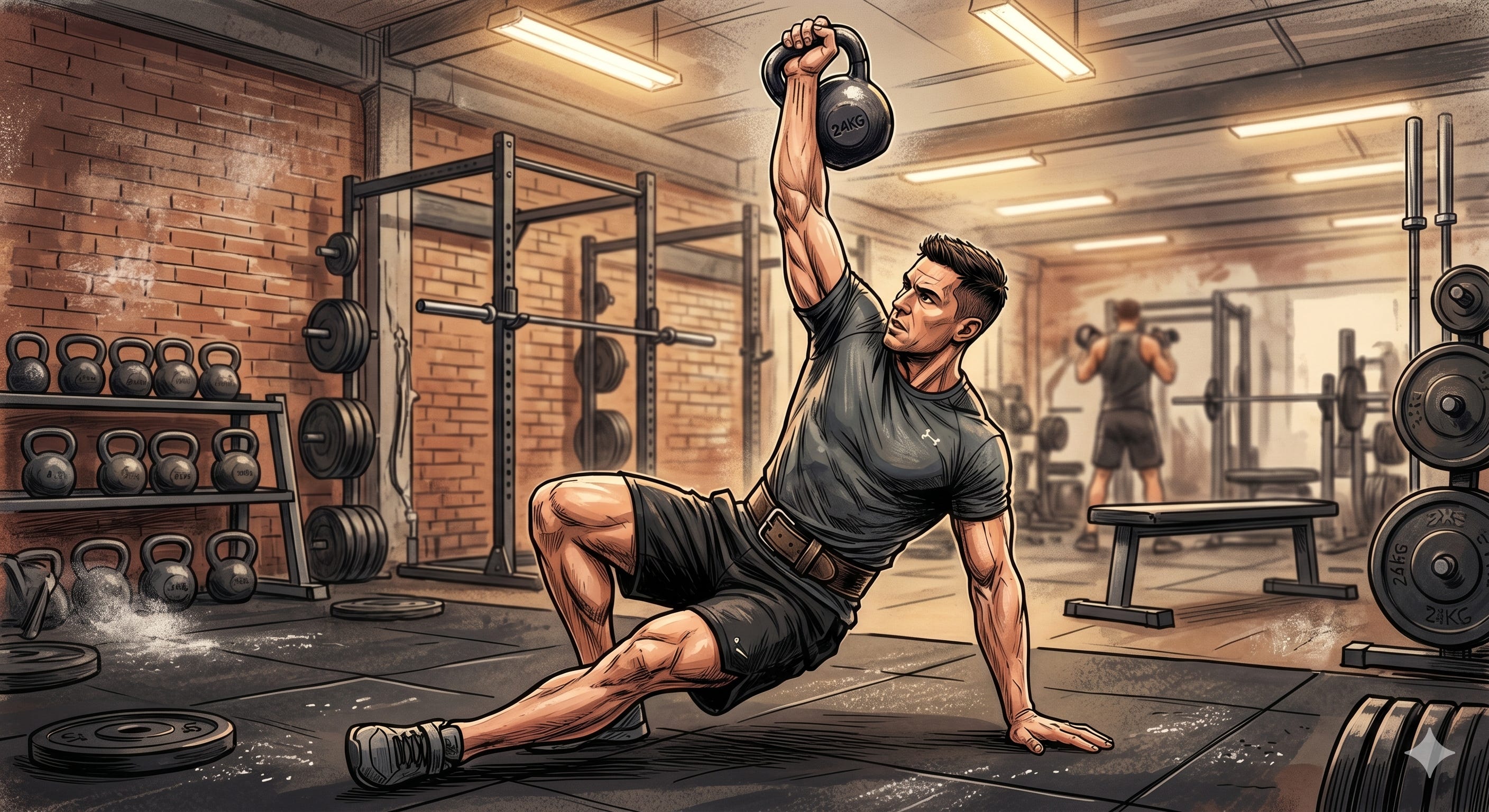
Mobility is active control through a range of motion. It’s not stretching. It’s not yoga class. It’s the ability to own the positions you put your body in — to move into a deep squat and out of it under your own power, to lift your arms overhead without your ribs flaring, to rotate your spine without your hips locking.
The joints decide what the muscles are allowed to do. A strong man with locked-down hips is a man waiting for a back injury. A powerful man with no thoracic rotation is one bad swing away from a torn shoulder. Mobility is the permission system for everything else.
My morning work lives here — Gary Ward’s foot wedge drills, hip mobility flows, and the controlled articular work that’s let me train hard at 52 without the breakdowns most men my age treat as inevitable.
The shortfall question: if mobility is missing, your strength and power are locked inside a body that won’t let them out.
Endurance
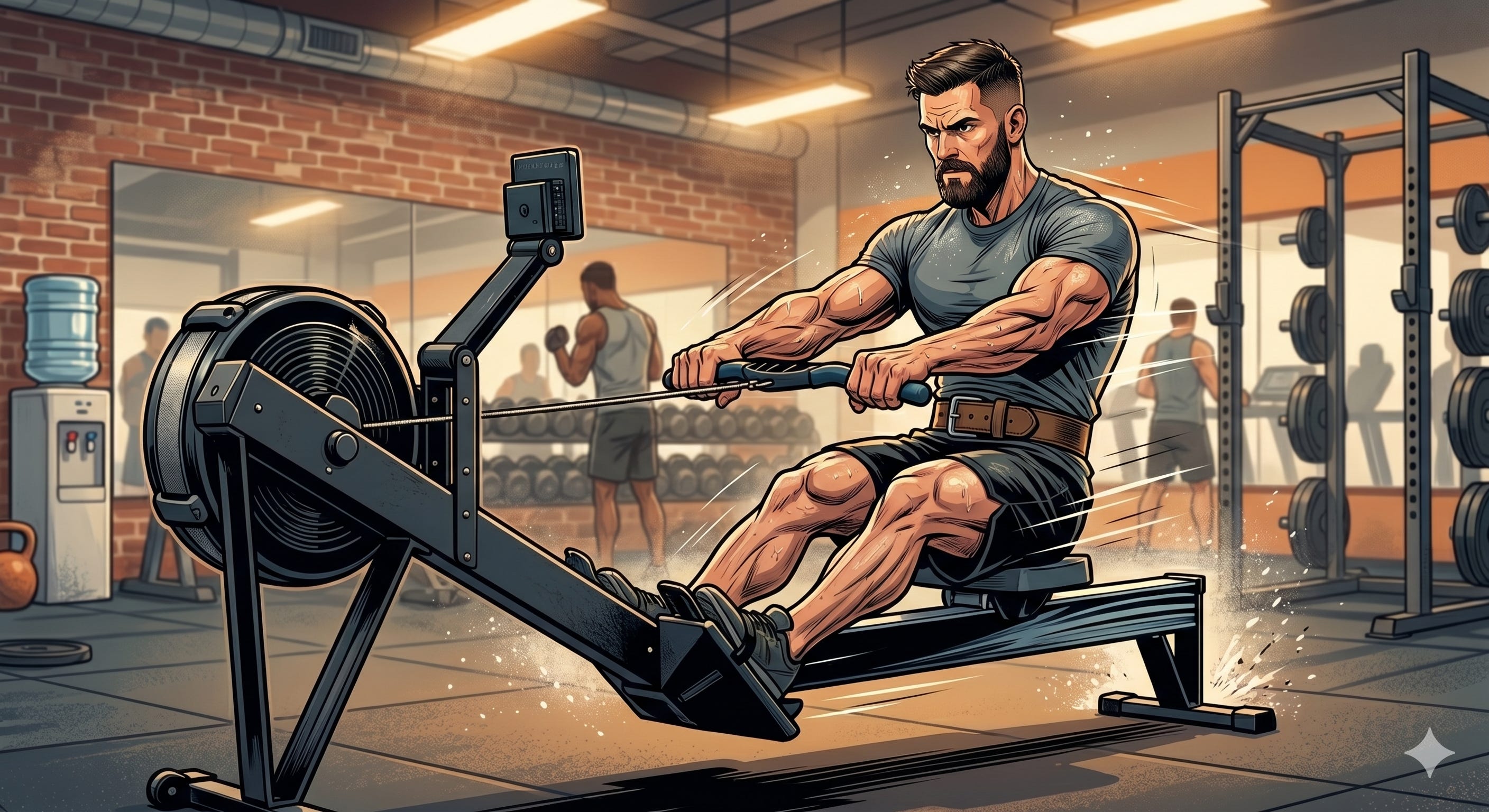
Endurance is the capacity to sustain output. It’s how long you can keep going, and — more importantly after 40 — how fast you recover when you stop.
Most men over 40 either ignore endurance entirely (the lifter who gets winded walking to the car) or they overdo it (the runner who’s grinding away his joints and his testosterone). Both are wrong. The goal isn’t marathon fitness. The goal is a heart that bounces back — a cardiovascular system that handles a hard set, a flight of stairs, or a sudden emergency without leaving you wrecked.
In my week this looks like brisk walking, low-intensity steady-state work, and the occasional harder session that pushes the top end. It never crowds out the other three. That’s the discipline.
The shortfall question: if endurance is missing, every other quadrant pays the tax. You can’t recover between sets, between sessions, or between weeks.
The Diagnostic: Which Quadrant Are You Shorting?
Here’s the part of the article where you stop reading about the framework and start running it on yourself.
Four questions. One per quadrant. You don’t need a gym, equipment, or a warm-up. You just need to answer honestly.
Strength. Can you carry a heavy bag of groceries up a flight of stairs in each hand without thinking about it? Could you carry your own bodyweight up that same flight…………your own weight in a loaded vest, or someone you love on your back?
Power. Can you jump? Not “could you survive jumping.” Can you actually leave the ground with intent ….. both feet, real height, no hesitation? When was the last time you sprinted? Not jogged. Sprinted.
Mobility. Can you sit down on the floor and stand back up without using your hands? Can you reach overhead without arching your lower back to get there? Can you squat all the way down — hips below your knees — and hold the position for thirty seconds?
Endurance. Can you hold a real conversation while walking up a steep hill? Can you climb four flights of stairs and arrive at the top still able to talk? If you had to run for a bus, would you make it………and would you recover within a minute?
Whichever one of those made you flinch is the quadrant you’re shorting.
You probably already know which one it is. You knew before I asked. Most men do. The framework just gives a name to the gap you’ve been working around for years.
How the Four Fit Together
I’m not going to hand you a program in this article. That’s not what this piece is for, and any coach who can write you a real program in 200 words is selling you something. But here’s the principle, because the principle is what the framework is actually for.
Every quadrant gets touched every week. Not equally……..in proportion to what your life and your goals demand. Strength and mobility usually get the most volume because they’re the foundation everything else stands on. Power gets quality over quantity……..small doses, full recovery, never grinded. Endurance gets handled in a way that doesn’t cannibalize the other three.
The mistake most men make isn’t that they ignore one quadrant. It’s that they let one quadrant eat the others. The endurance guy whose strength erodes. The strength guy whose mobility locks down. The Instagram guy who chases power without the foundation to express it safely.
A balanced training week isn’t four workouts split four ways. It’s a week where, when you look back on it, you can see all four buckets got fed.
More is not better. Better is better. The four quadrants tell you what “better” actually means.
The Real Point
Go back to the man at the squat rack.
He isn’t lazy. He isn’t undisciplined. He’s not weak-willed or distracted or missing some piece of motivation that other men have figured out. He’s been working hard inside a system that doesn’t exist and effort without a system is how strong, motivated men spend a decade making no real progress.
The four quadrants aren’t a program. They’re not a protocol. They’re not the next thing to add to the pile of things he’s already tried. They’re a question. Where am I actually spending my training week, and what is it building?
That question changes a man’s relationship with his own training. He stops collecting workouts and starts thinking about adaptations. He stops asking what should I do tomorrow and starts asking what am I shorting this month. He stops chasing the program and starts coaching himself, because the framework gives him the language he never had.
My own training is built on these four because they’re what’s kept me in the game at 52. I’m still sprinting. I’m still lifting heavy. I’m still moving through ranges of motion most men my age stopped owning in their thirties. I’m still recovering from hard sessions in a day, not a week.
Not because of any single workout. Not because of a magic protocol. Because of how all four quadrants work together, week after week, year after year, decade after decade.
That’s the framework. That’s what it does.
The next move is yours.
The Longevity Project
The Longevity Project is where I think out loud about training, recovery, and aging well — backed by what I’m actually doing in my own body and with the men I coach. If this piece resonated, subscribe to get the next one. I’m writing about sprint mechanics for the aging athlete next, and a deep dive on what mobility actually means after 40 is coming soon.
If the diagnostic landed — if one of those four questions made you flinch — hit reply and tell me which quadrant you’re shorting. I read every response. Sometimes that’s the start of a conversation about coaching. Sometimes it’s just an honest exchange between two men who care about doing this well. Either is worth my time.
And forward this to a friend who’s been training hard for years without a system. The four quadrants are the framework I wish someone had handed me at 35. Pass it along.
I write about this concept continually. Particularly in the first responder/tactical realm. You can only do as much as you can recover from.