
The Anti-Aging Cheat Code (It’s Not a Supplement, It’s a Movement)
The single most neglected movement in adult life (and how to bring it back)

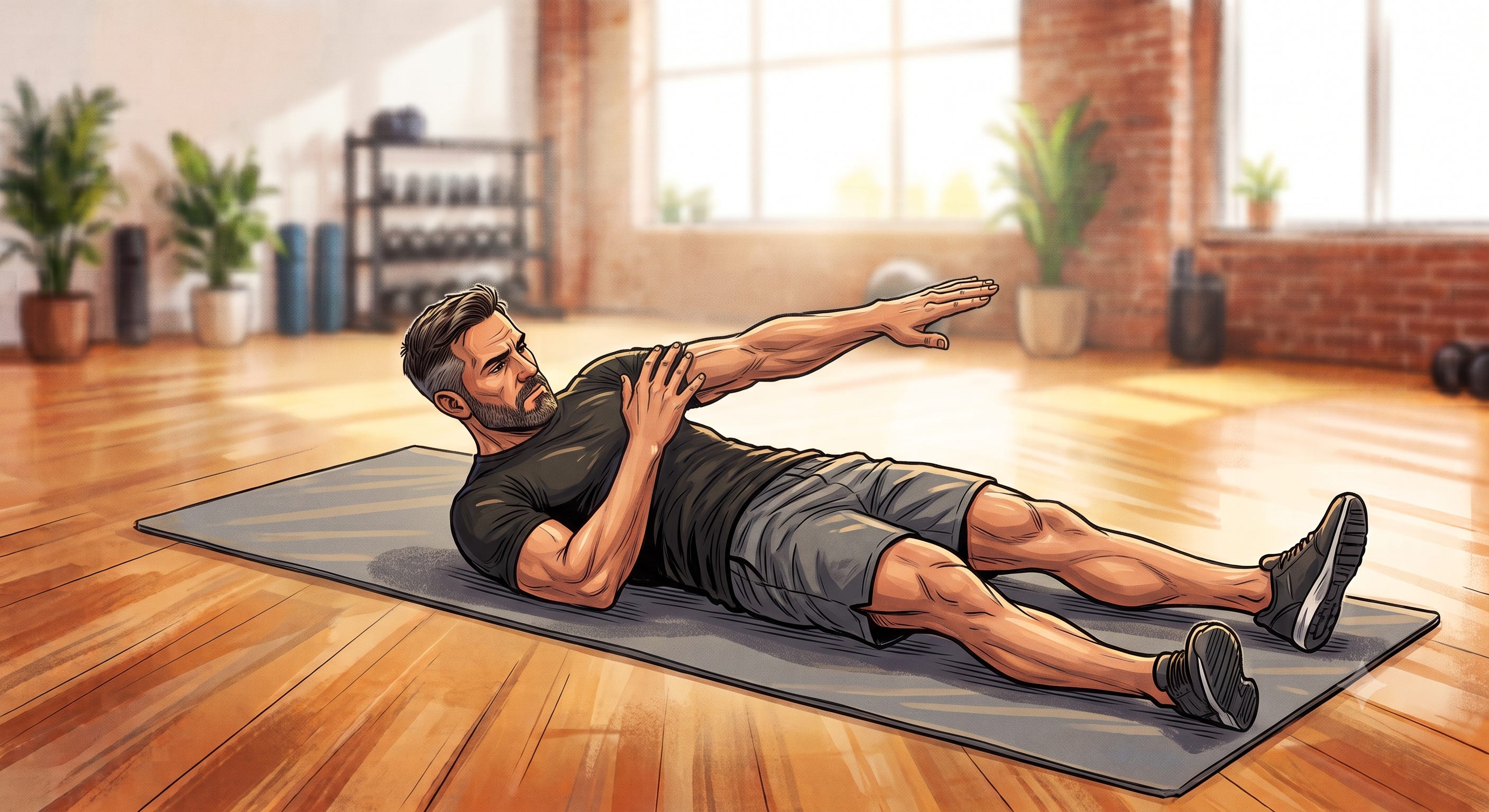
If I told you there was a single movement that could re-integrate your nervous system, smooth out your walking gait, wake up your core, and make you feel more coordinated in a matter of weeks, and that you already knew how to do it before you could walk, would you believe me?
You did it thousands of times before your first birthday. Then you got good at standing, walking, running... and you never did it again.
I’m talking about rolling on the ground.
The Movement That Built You
Before you ever took a step, you rolled. Not because a physical therapist told you to, not because it was on a program. You rolled because you were curious. You wanted to see what was on the other side of the room, reach the toy just out of range, get closer to your mom’s voice. Rolling was driven by exploration, and that exploration is exactly what built your movement capacity from the ground up.
Rolling is arguably the single most important movement a baby performs. It’s also the single most neglected movement in adult life. We spend decades sitting, walking in straight lines, and moving almost exclusively in the sagittal plane, forward and back. We stop rotating. We stop disassociating our upper body from our lower body. And then we wonder why we feel stiff, disconnected, and clumsy by 40.
If you want to restore real mobility, coordination, and movement quality, you don’t need a new gadget or a new supplement stack. You need to get back on the ground and roll.
Why Rolling Works (The Neurology Behind the “Cheat Code”)
This isn’t just a stretch or a core exercise. Rolling is a full neurological event. When you roll well, you are:
Activating your vestibular system: your body’s internal GPS, responsible for balance, spatial orientation, and knowing where you are relative to gravity
Activating your visual system: your eyes lead the movement and help orient the rest of the body through space
Integrating upper body and lower body: teaching them to work as one connected system again
Integrating left and right: building the cross-body communication that so much of daily life and athletic movement depends on
Activating the core: not through isolated crunches, but through the reflexive stabilization rolling demands
Teaching disassociation: the skill of moving your upper body independently from your lower body (and vice versa), which is essential for rotational power and graceful movement
Improving your walking mechanics: because rolling trains the same rotational fascial slings that drive an efficient gait
That last point is worth sitting with. Every time you walk, your body is relying on a rotational connection between opposite hip and shoulder, the same diagonal connection you rebuild every time you roll. Better rolling, better walking. It’s that direct.
The Three Rolling Patterns
In the video, I break rolling down into three patterns. Each one trains a different piece of the puzzle:
1. Upper Body Dominant Roll The sequence matters here more than anything: eyes and head move first, then the trunk follows, then the arm completes the roll. Let your eyes lead. This is how the pattern was designed to work, and rushing the sequence is the most common mistake I see.
2. Lower Body Dominant Roll Lead with the knee. Bend it, let the hip follow, and reach with the foot to initiate the roll. This pattern wakes up the lower body’s role in rotation, something most adults have completely lost touch with.
3. The X Roll Place a ball between one knee and the opposite elbow and roll while keeping that connection. This pattern directly trains the diagonal sling, right upper body to left lower body and vice versa, which is the exact pattern your body uses every time you walk or run.
Master these three, and you’re preparing your body for something even more advanced: rolling from a standing position, which brings the full pattern into an upright, functional context.
The Bottom Line
This work is neurological before it’s physical. You’re not just building strength or flexibility. You’re re-integrating pieces of your nervous system that have gone quiet from disuse. Every roll is a small rehearsal in coordination, timing, and connection between the halves of your body.
You don’t need more complexity to move better as you age. You need to go back to the movement that built you in the first place.
So get on the ground. Start rolling your way to better health, function, and movement.
My dogs are VERY excited about incorporating rolling on the floor into my routine.
might have to give rolling a try!